
SECURITY AUTOMATION SERVICES
Automate Repetitive Security Work Without Losing Control
PenteScope develops practical security automation workflows that reduce repetitive manual tasks, improve consistency, and help security teams operate more efficiently—while keeping visibility and control at the centre of the process.
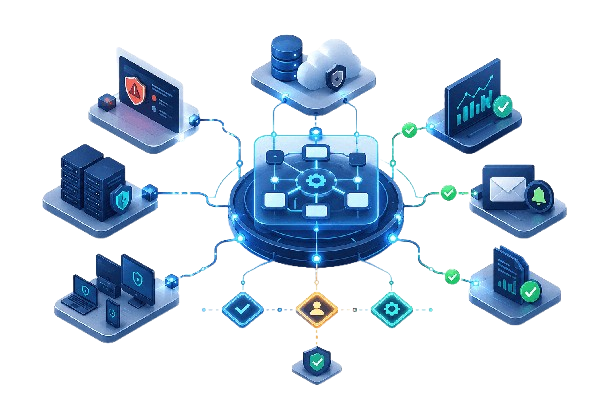
PRACTICAL SECURITY AUTOMATION
Reduce Repetitive Work. Improve Security Consistency.
Security teams often spend valuable time repeating routine tasks across monitoring, investigation, reporting, and operational workflows. When these processes depend heavily on manual effort, they can become slower, inconsistent, and difficult to scale.
PenteScope develops practical automation workflows that connect relevant security processes, reduce unnecessary manual steps, and support more consistent execution—while preserving appropriate human oversight and control.
AUTOMATION OPPORTUNITIES
Security Workflows Built Around Your Operational Needs
The right automation opportunities depend on your existing tools, processes, and security objectives. PenteScope focuses on repeatable workflows where automation can reduce manual effort, improve consistency, and support better security operations.
Security Monitoring Workflows
Automate repeatable monitoring activities and workflow steps to help security teams collect, organise, and route relevant security information more consistently.
Alert Triage & Enrichment
Streamline repetitive alert-handling tasks by gathering relevant context, enriching security events, and supporting more consistent initial triage before human review.
Vulnerability Management Workflows
Automate repeatable steps around vulnerability information, prioritisation workflows, tracking, notifications, and remediation coordination.
Security Reporting & Notifications
Automate recurring security reporting, status updates, notifications, and information delivery to help relevant teams maintain visibility without unnecessary manual effort.
OUR APPROACH
Automation Designed Around Your Security Workflow
Effective security automation starts with understanding the process before automating it. PenteScope takes a structured approach to identify suitable opportunities, define workflow requirements, implement controlled automation, and validate that the resulting process supports your security objectives.
01
Workflow Discovery
Understand the existing security process, tools, inputs, outputs, responsibilities, and repetitive manual steps that may benefit from automation.
02
Automation Design
Define the workflow logic, integrations, triggers, actions, exceptions, and points where human review or approval should remain part of the process.
03
Controlled Implementation
Build and configure the automation within the agreed environment, connecting relevant systems and workflow components while maintaining appropriate controls.
04
Testing & Validation
Test workflow behaviour, expected outputs, exception handling, and relevant controls to confirm that the automation operates as intended.
05
Handover & Improvement
Document the implemented workflow and provide the information needed to operate, review, and refine the automation as security processes evolve.
WHAT YOU RECEIVE
Automation Your Team Can Understand and Operate
Security automation should remain understandable and manageable after implementation. PenteScope focuses on delivering practical workflows with clear logic, appropriate controls, and supporting information that helps your team operate and maintain the automation.
Implemented Security Workflow
A configured automation workflow designed around the agreed security process, requirements, and systems within the engagement scope.
Workflow Logic & Documentation
Clear documentation of relevant workflow logic, triggers, actions, integrations, dependencies, and operational considerations.
Testing & Validation Results
Confirmation that the implemented workflow has been tested against agreed requirements, including expected behaviour and relevant exception conditions.
Operational Guidance
Practical information to help your team understand how the automation operates, where human review remains necessary, and how the workflow can be managed as requirements evolve.
WHY PENTESCOPE
Practical Automation. Security Remains in Control.
Effective automation should make security operations more consistent without introducing unnecessary complexity or removing appropriate oversight. PenteScope focuses on practical workflows that support your existing security processes and remain understandable to the teams responsible for them.
Security-Focused Automation
Automation is designed around security objectives and operational requirements rather than introducing technology simply for the sake of automation.
Human Oversight Where It Matters
Workflows can preserve appropriate review, approval, and decision points where security judgement or operational control should remain with your team.
Built Around Existing Processes
Automation is shaped around the agreed workflow, systems, and operational context to support practical integration with the way your team works.
FREQUENTLY ASKED QUESTIONS
Security Automation Questions, Answered
Understand how PenteScope approaches security automation, which workflows may be suitable for automation, and what to expect from an automation engagement.
What is security automation?
Security automation uses defined workflows, integrations, and automated actions to reduce repetitive manual tasks within security operations. It can help improve consistency and efficiency while retaining human oversight where judgement or approval is required.
What security processes can be automated?
Suitable opportunities depend on your environment and existing processes. Examples may include repetitive monitoring workflows, alert enrichment and triage steps, vulnerability management activities, notifications, reporting, and other structured security tasks.
Does security automation replace security professionals?
No. PenteScope approaches automation as a way to support security teams by reducing repetitive work and improving process consistency. Human judgement, investigation, approval, and decision-making can remain part of workflows where appropriate.
Can security automation integrate with existing tools?
Integration depends on the systems involved, available interfaces, workflow requirements, and agreed scope. PenteScope assesses relevant tools and integration options during workflow discovery before determining an appropriate automation approach.
What happens after a security automation workflow is implemented?
The workflow is tested against agreed requirements and documented to help your team understand its operation, dependencies, and relevant controls. Automation can then be reviewed and refined as your tools, processes, and security requirements evolve.
READY TO AUTOMATE YOUR SECURITY WORKFLOWS?
Reduce Repetitive Security Work Without Losing Visibility
Tell us about your security processes, existing tools, and repetitive workflows. We’ll help identify where practical automation could improve consistency and operational efficiency.