
SECURITY ASSESSMENT SERVICES
Understand Your Security Gaps Before They Become Bigger Risks
PenteScope provides practical security assessments to identify weaknesses, evaluate security controls, and highlight gaps across your digital environment—helping your team understand where security improvements should be prioritised.
UNDERSTAND YOUR SECURITY POSTURE
See Where Your Security Controls Are Strong—and Where Gaps Remain
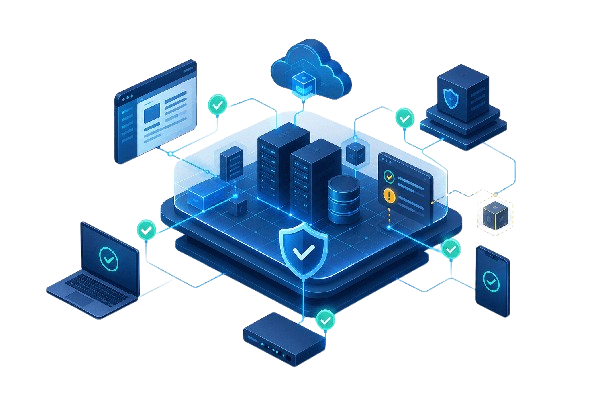
Security weaknesses do not exist in isolation. Gaps in configurations, access controls, exposed services, applications, infrastructure, and security processes can combine to increase risk across your environment.
PenteScope takes a structured approach to security assessment, reviewing relevant systems and controls to identify weaknesses, highlight security gaps, and provide practical recommendations that help your team prioritise improvements.
ASSESSMENT COVERAGE
Security Assessment Built Around Your Environment
Every environment has different technologies, controls, and security priorities. PenteScope tailors each assessment to the agreed scope, reviewing relevant systems and security controls to identify weaknesses, highlight gaps, and help prioritise practical improvements.
Security Configuration & Hardening
Review relevant system and service configurations to identify insecure settings, unnecessary exposure, weak hardening practices, and other configuration gaps that could increase security risk.
Identity & Access Controls
Assess relevant authentication, authorization, account management, and access-control practices to identify weaknesses that could result in inappropriate or excessive access.
Network & Infrastructure Security
Evaluate relevant network and infrastructure security controls to identify exposure, segmentation weaknesses, insecure services, and other gaps that could affect the resilience of your environment.
Application & Service Exposure
Review relevant applications and exposed services for security weaknesses, unnecessary exposure, and control gaps that could increase the organisation’s attack surface.
Our Approach
A Structured Approach to Understanding Security Risk
Every security assessment begins with a clear understanding of your environment, objectives, and agreed scope. PenteScope follows a structured process to review relevant systems and controls, identify security gaps, evaluate their significance, and provide practical recommendations for improvement.
01
Scope & Objectives
Define the assessment objectives, systems and controls in scope, relevant business context, priorities, exclusions, and assessment boundaries before the review begins.
02
Environment & Control Review
Review the agreed environment and relevant security controls to understand technologies, configurations, access mechanisms, exposed services, and existing protective measures.
03
Gap Identification & Analysis
Identify security weaknesses, control gaps, unnecessary exposure, and other conditions that could increase risk within the assessed environment.
04
Risk Evaluation & Prioritisation
Evaluate identified issues in context to understand their potential security impact and help determine which improvements should receive the greatest attention.
05
Reporting & Recommendations
Document assessment findings with clear context and practical recommendations to help your team understand the issues and plan appropriate security improvements.
WHAT YOU RECEIVE
Clear Findings. Practical Security Priorities
A security assessment should do more than identify weaknesses. PenteScope provides clear findings, security context, and practical recommendations to help your team understand where gaps exist and where improvement efforts should be focused.
Security Assessment Findings
Clear documentation of identified weaknesses, control gaps, and security concerns within the agreed assessment scope, with relevant context to help your team understand each issue.
Security Gap Analysis
An assessment of where existing security controls, configurations, or practices may leave unnecessary exposure or opportunities for improvement.
Prioritised Recommendations
Practical recommendations that help your team understand which security improvements should receive attention and where remediation effort can be focused.
Executive Security Summary
A concise overview of significant findings, key security themes, and priorities to help decision-makers understand the overall assessment outcome.
WHY PENTESCOPE
Security Assessment Focused on Meaningful Improvement
Effective security assessment is not simply about producing a list of weaknesses. PenteScope focuses on understanding security issues in context, identifying meaningful gaps, and providing clear recommendations that help your team make informed security improvements.
Practical Security Context
Findings are considered within the context of the assessed environment, helping your team understand why identified weaknesses or control gaps matter and where they may create security risk.
Prioritised Improvement
Assessment findings are communicated with practical recommendations to help your team focus security effort on areas where improvement can provide meaningful value.
Assessment Within Defined Scope
Assessment objectives, systems, controls, boundaries, and exclusions are agreed before the engagement begins to keep the review focused and aligned with your security needs.
FREQUENTLY ASKED QUESTIONS
Security Assessment Questions, Answered
Understand how PenteScope approaches security assessments, what an assessment may cover, and what your team can expect from the process and findings.
What is a security assessment?
A security assessment is a structured review of relevant systems, configurations, controls, and security practices to identify weaknesses and gaps that could increase risk. The assessment is performed within an agreed scope and provides findings and recommendations to help guide security improvements.
How is a security assessment different from penetration testing?
A security assessment takes a broader view of security controls, configurations, exposure, and potential gaps across an agreed environment. Penetration testing focuses more specifically on safely validating whether identified weaknesses can be exploited and understanding their practical security impact.
What can a PenteScope security assessment cover?
Depending on the agreed scope, a security assessment may review areas such as system and service configurations, identity and access controls, network and infrastructure security, applications, exposed services, and other relevant security controls within your environment.
How long does a security assessment take?
The duration depends on the size and complexity of the environment, the systems and controls included in scope, and the objectives of the assessment. PenteScope defines the expected scope and assessment timeline before the engagement begins.
What happens after the security assessment?
PenteScope provides documented findings with relevant security context and practical recommendations. Your team can use these findings to prioritise improvements, address identified gaps, and strengthen security controls based on the needs of your environment.
READY TO STRENGTHEN YOUR SECURITY POSTURE?
Understand Your Security Gaps and What to Improve Next
Tell us about your environment, security concerns, and assessment objectives. We’ll help determine an appropriate scope and approach for your security assessment.