
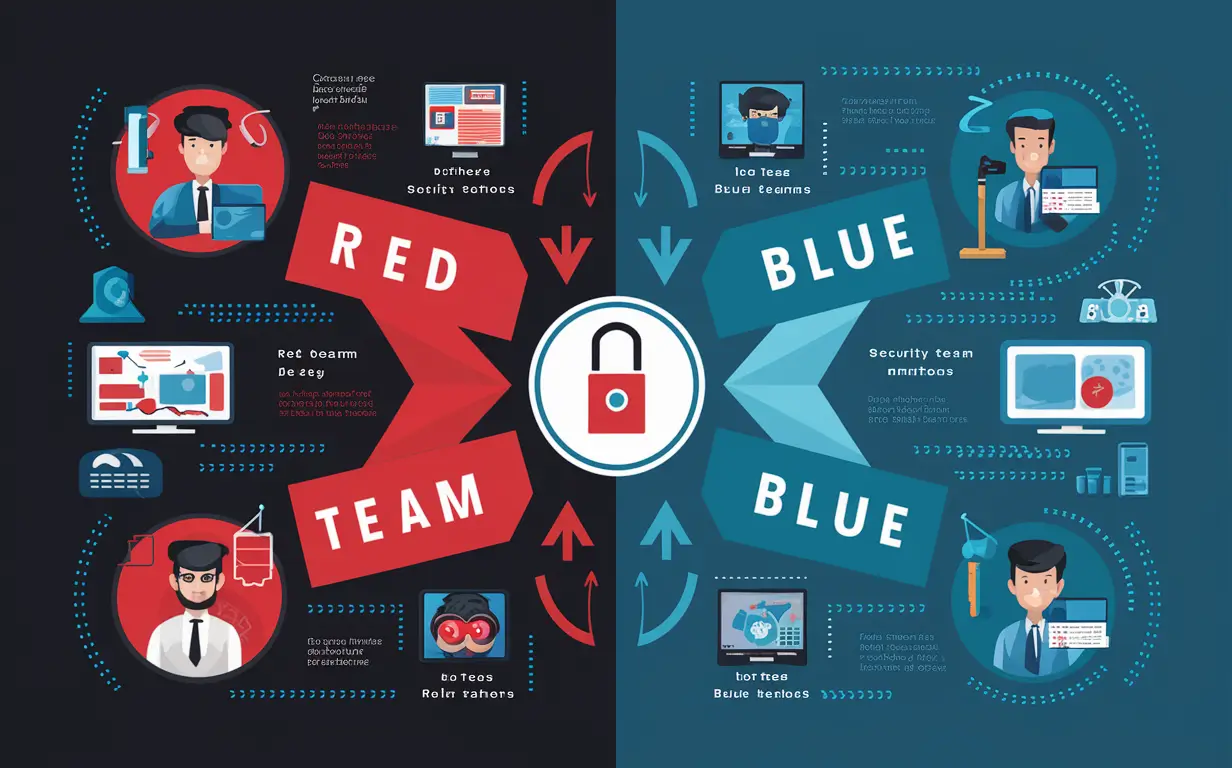
In the ever-evolving landscape of cybersecurity, the roles of Red Teams and Blue Teams have become pivotal in defending against increasingly sophisticated cyber threats. “Red Team vs. Blue Team: The Art of Cybersecurity Warfare” delves into the dynamic interplay between these two specialized groups, where Red Teams adopt the role of attackers to identify vulnerabilities while Blue Teams focus on fortifying defenses and responding to breaches. Understanding the tactics, tools, and methodologies employed by each team is essential for organizations aiming to build a robust security posture. This article explores their crucial roles, collaboration, and the future of cybersecurity warfare.
Introduction to Red Team vs. Blue Team: The Art of Cybersecurity Warfare
Defining Red Teams and Blue Teams
Red Teams and Blue Teams are specialized groups within cybersecurity that play crucial roles in protecting organizations from digital threats. Red Teams act as simulated attackers, while Blue Teams focus on defending against these simulated and real-world attacks.
The purpose of penetration testing
Penetration testing, often conducted by Red Teams, aims to identify vulnerabilities in an organization’s systems, networks, and applications. This proactive approach helps organizations strengthen their defenses before malicious actors can exploit weaknesses.
Historical development of Red Team and Blue Team concepts
The concepts of Red Teams and Blue Teams originated in military strategy and were later adapted for cybersecurity. As cyber threats evolved, these teams became essential to modern information security practices.
Red Team: Offensive Security Specialists
Roles and responsibilities of Red Team members
Red Team members typically include ethical hackers, penetration testers, and security researchers. Their primary responsibility is to simulate real-world attacks to test an organization’s defenses.
Common Red Team tactics and techniques
Red Teams employ various tactics, such as social engineering, network scanning, and exploit development. They often use the same tools and methods as malicious hackers to provide a realistic assessment of an organization’s security posture.
Tools and technologies used by Red Teams
Red Teams utilize a wide array of tools, including vulnerability scanners, password-cracking software, and custom-built exploits. They also leverage open-source intelligence (OSINT) tools to gather information about their targets.
Blue Team: Defensive Security Experts
Key functions of Blue Team members
Blue Team members are responsible for maintaining an organization’s security defenses. This includes monitoring systems for suspicious activities, responding to incidents, and implementing security controls.
Defensive strategies and best practices
Blue Team focuses on implementing robust security measures, such as firewalls, intrusion detection systems, and access controls. They also develop and maintain incident response plans and conduct regular security assessments.
Blue Team tools and technologies
Blue Teams rely on various security information and event management (SIEM) tools, endpoint detection and response (EDR) solutions, and threat intelligence platforms to protect their organizations.
The Penetration Testing Process
Planning and scoping the engagement
Before starting a penetration test, Red and Blue Teams collaborate to define the scope, objectives, and rules of engagement. This ensures that the test is conducted safely and effectively.
Reconnaissance and information gathering
Red Teams begin by collecting information about their target, using both passive and active techniques. This phase helps them identify potential entry points and vulnerabilities.
Execution and reporting of findings
During the execution phase, Red Teams attempt to exploit identified vulnerabilities. They document their findings and provide detailed reports to help organizations improve their security posture.
Collaboration Between Red and Blue Teams
Establishing clear communication channels
Effective communication between Red and Blue Teams is crucial for successful security operations. Regular meetings and defined reporting processes help ensure that both teams are aligned in their objectives.
Sharing information and insights
Red and Blue Teams should openly share their findings, techniques, and observations. This exchange of information helps both teams improve their skills and stay up-to-date with the latest threats and defenses.
Joint analysis and problem-solving
By working together, Red and Blue Teams can develop more comprehensive security solutions. Joint analysis of penetration test results can lead to more effective defensive strategies and improved overall security.
Challenges and Limitations in Red Team vs. Blue Team Exercises
Balancing realism with organizational constraints
Organizations must strike a balance between conducting realistic simulations and avoiding disruptions to their operations. This can sometimes limit the scope and effectiveness of Red Team exercises.
Managing potential conflicts and misunderstandings
Tensions can arise between Red and Blue Teams due to their opposing objectives. Clear communication and mutual respect are essential to maintain a productive working relationship.
Addressing legal and ethical considerations
Red Team activities must be conducted within legal and ethical boundaries. Organizations must ensure proper agreements and permissions are in place before conducting penetration tests.
Future Trends in Red Team and Blue Team Dynamics
Emerging technologies and their impact
Advancements in technologies like cloud computing and Internet of Things (IoT) devices are changing the cybersecurity landscape. Red and Blue Teams must adapt their strategies to address these new challenges.
Evolution of attack and defense methodologies
As cyber threats become more sophisticated, both Red and Blue Teams need to evolve their techniques continually. This includes developing new attack vectors and implementing more advanced defensive measures.
Integration of artificial intelligence and machine learning
AI and machine learning are increasingly used in offensive and defensive cybersecurity operations. These technologies can enhance the capabilities of both Red and Blue Teams but also introduce new challenges.
Conclusion
The dynamic between Red Teams and Blue Teams is crucial in modern cybersecurity. These teams help organizations stay ahead of cyber threats by simulating real-world attacks and strengthening defenses. As technology continues to evolve, the collaboration between Red and Blue Teams will become even more critical in maintaining robust cybersecurity postures.
Call to Action
We invite you to subscribe to our monthly newsletter and follow us on our Facebook, X, and Pinterest channels for more insights and updates on cybersecurity trends and best practices. Our blog provides valuable information and resources to help you stay informed and prepared against evolving threats.
Engage with our community to share knowledge, ask questions, and stay connected with industry developments. Visit our About Us page to learn more about who we are and what we do. If you have any questions, please reach out through our contact page. You can also explore our services to discover how we can help enhance your security posture.
Frequently Asked Questions
What is the main difference between Red Teams and Blue Teams?
Red Teams simulate attacks to uncover vulnerabilities, while Blue Teams defend against these attacks and strengthen security measures. Red Teams act as adversaries; Blue Teams as defenders.
How often should organizations conduct Red Team exercises?
Organizations should conduct Red Team exercises annually or more frequently if needed. Regular testing helps stay ahead of emerging threats and ensures the ongoing effectiveness of security measures.
Can small businesses benefit from red-team and blue-team dynamics?
Yes, small businesses can benefit by identifying vulnerabilities through Red Team exercises and improving defenses with Blue Team practices, enhancing overall security despite limited resources.
What skills are essential for Red Team and Blue Team members?
Red Team members need expertise in penetration testing, exploitation tools, and hacking techniques. Blue Team members should excel in incident response, monitoring, and managing security controls.
How do Red Team and Blue Team exercises differ from traditional security audits?
Red and Blue Team exercises involve active attack simulations and defense practices, while traditional audits focus on compliance and policy review and lack the hands-on, practical security testing approach.